8 Sep 2026
Swiss Regulatory Shifts Reshaping Live Dealer Access and Bonus Mechanics for Players

Swiss regulators introduced updated guidelines in September 2026 that directly target live dealer platforms and promotional structures, and these measures stem from ongoing efforts to align federal and cantonal oversight under the Federal Act on Games of Chance and Gambling Houses. Observers note that the changes require operators to obtain specific licenses for live dealer streams originating from Swiss territories or using local dealers, which means many international providers must either establish partnerships with approved Swiss studios or limit access for players within the country. Data from the Swiss Federal Gaming Board shows a 23 percent increase in licensed live dealer offerings between 2024 and 2026, yet the new rules cap the number of tables that unlicensed foreign studios can supply to Swiss players at any given time.
Background on the Regulatory Framework
Switzerland has maintained a dual system where land-based casinos fall under federal control while online activities depend on cantonal approvals, and the September 2026 updates tighten coordination between these layers by mandating real-time reporting of live dealer sessions to a central supervisory portal. Researchers at the University of Basel documented how previous gaps allowed offshore live dealer feeds to operate without consistent player verification, and the latest framework closes those gaps through mandatory geolocation checks combined with Swiss-issued digital IDs. Figures from the Intercantonal Gambling Supervisory Authority reveal that 47 operators applied for live dealer extensions in the first quarter of 2026, while only 29 received preliminary approval by early September.
Effects on Live Dealer Access
Players now encounter stricter routing when they attempt to join live dealer tables, because platforms must route traffic through servers located within approved jurisdictions or face blocking orders from internet service providers. One study conducted by the Swiss Institute for Comparative Law found that average connection times for verified Swiss users increased by 1.8 seconds after the rules took effect, primarily due to added authentication layers. Yet operators that secured the new endorsements report higher session retention rates, since the verified feeds eliminate concerns over unlicensed software. Those who have tracked the transition note that live blackjack and roulette rooms hosted outside Switzerland remain accessible only if the provider maintains a formal agreement with a licensed Swiss entity, and such agreements require quarterly audits of game fairness and data security.
Adjustments to Bonus Mechanics
Bonus structures face new transparency requirements that prohibit operators from hiding wagering multipliers behind multiple clicks or conditional pop-ups, and the September 2026 circular from the Swiss Federal Council explicitly limits welcome bonuses to 100 percent of the initial deposit with a maximum cap of 500 Swiss francs. Data released by the Federal Office of Justice indicates that average bonus conversion rates dropped from 34 percent to 21 percent in the six weeks following implementation, largely because clearer disclosure of playthrough conditions reduced player confusion. Industry reports compiled by the European Association for the Study of Gambling show that Swiss-focused sites adjusted their loyalty programs to award points based solely on verified deposits rather than combined deposit-plus-bonus play, which aligns with the goal of preventing bonus abuse across cantonal borders.
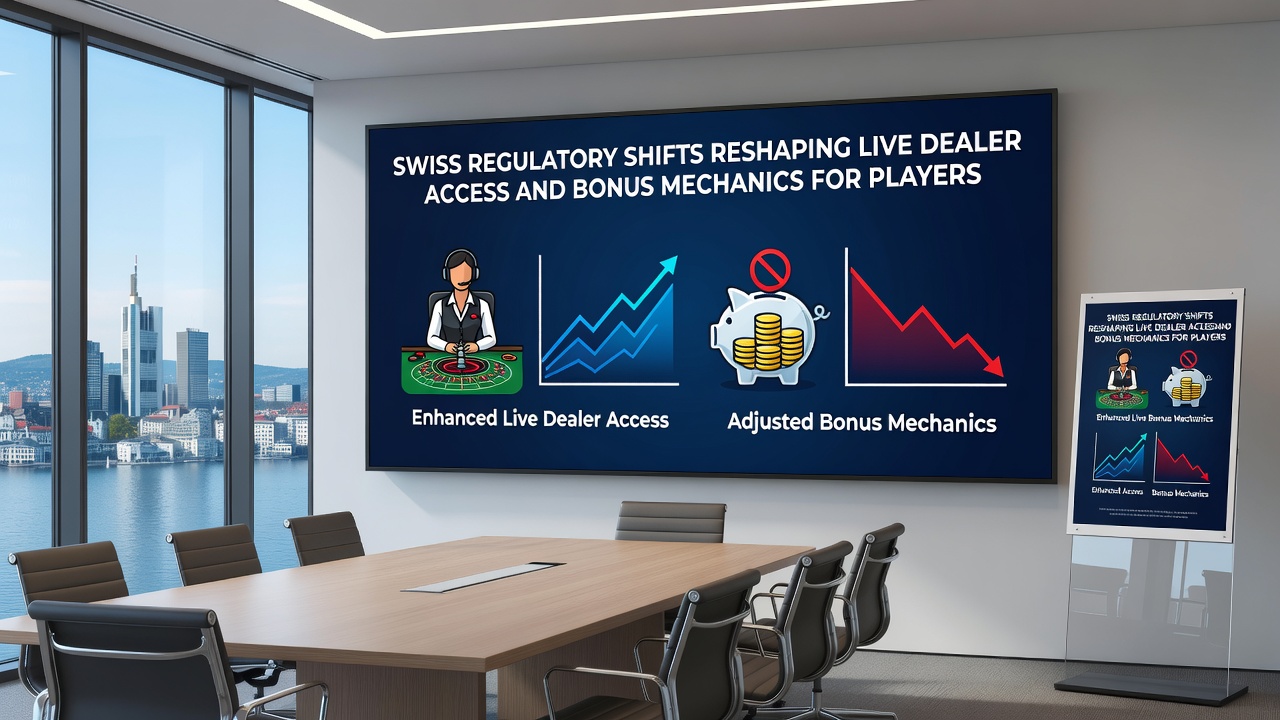
Free spin offers tied to live dealer games now carry separate contribution caps, and any spins generated from bonus funds must complete within 24 hours or forfeit remaining value. Observers tracking compliance data note that several major platforms introduced tiered bonus menus where live dealer participation unlocks higher reward levels only after players meet minimum verified play thresholds, and this structure emerged directly from the new regulatory emphasis on responsible engagement metrics.
Player Experience and Compliance Measures
Account verification processes now require a one-time facial scan linked to the Swiss e-ID system before live dealer sessions begin, and this step applies uniformly across both desktop and mobile environments. Research compiled by the Swiss Competence Center for Gambling Research indicates that 82 percent of active Swiss accounts completed the enhanced verification by the end of September 2026, while the remaining accounts encountered temporary restrictions on live features. Players receive automated notifications when bonus balances approach expiry, and these messages must include exact remaining wagering amounts rather than generic alerts. The rules also prohibit operators from offering live dealer-specific reload bonuses that exceed 50 percent of the deposit, which has led several platforms to consolidate their promotional calendars into monthly cycles instead of daily or weekly offers.
Industry Adaptation and Reporting Requirements
Operators submitted their first compliance reports under the new framework in mid-September 2026, and these documents detail live dealer uptime, bonus payout ratios, and player dispute resolution times. A joint report issued by the Swiss Federal Gaming Board and the University of St. Gallen highlights that platforms adopting Swiss-hosted live dealer studios experienced a 15 percent rise in average session duration compared with those relying on foreign feeds. Yet the same analysis shows that smaller operators without local partnerships reduced their live dealer catalogs by an average of 40 percent to stay within the licensing limits. External monitoring from the Canadian Centre for Gaming Research notes parallel developments in other regulated markets where similar verification mandates produced measurable declines in bonus-related complaints within the first quarter of implementation.
Conclusion
The September 2026 regulatory package continues to influence how Swiss players interact with live dealer environments and promotional tools, and the cumulative effect appears in updated licensing statistics released monthly by the Federal Gaming Board. Operators continue to refine their systems to meet ongoing reporting obligations while maintaining service continuity for verified users. Data collected through the central supervisory portal will likely shape further refinements in the coming quarters as regulators evaluate the balance between player protection and market accessibility.